
Point of Care
Why Point of Care Engagement Needs to Be Designed Around Clinical Workflow
Executive analysis from Flora Health leadership on the partnerships, infrastructure, and workflow intelligence shaping the next era of point-of-care engagement.
EHR Engagement Has to Respect the Clinical Workflow
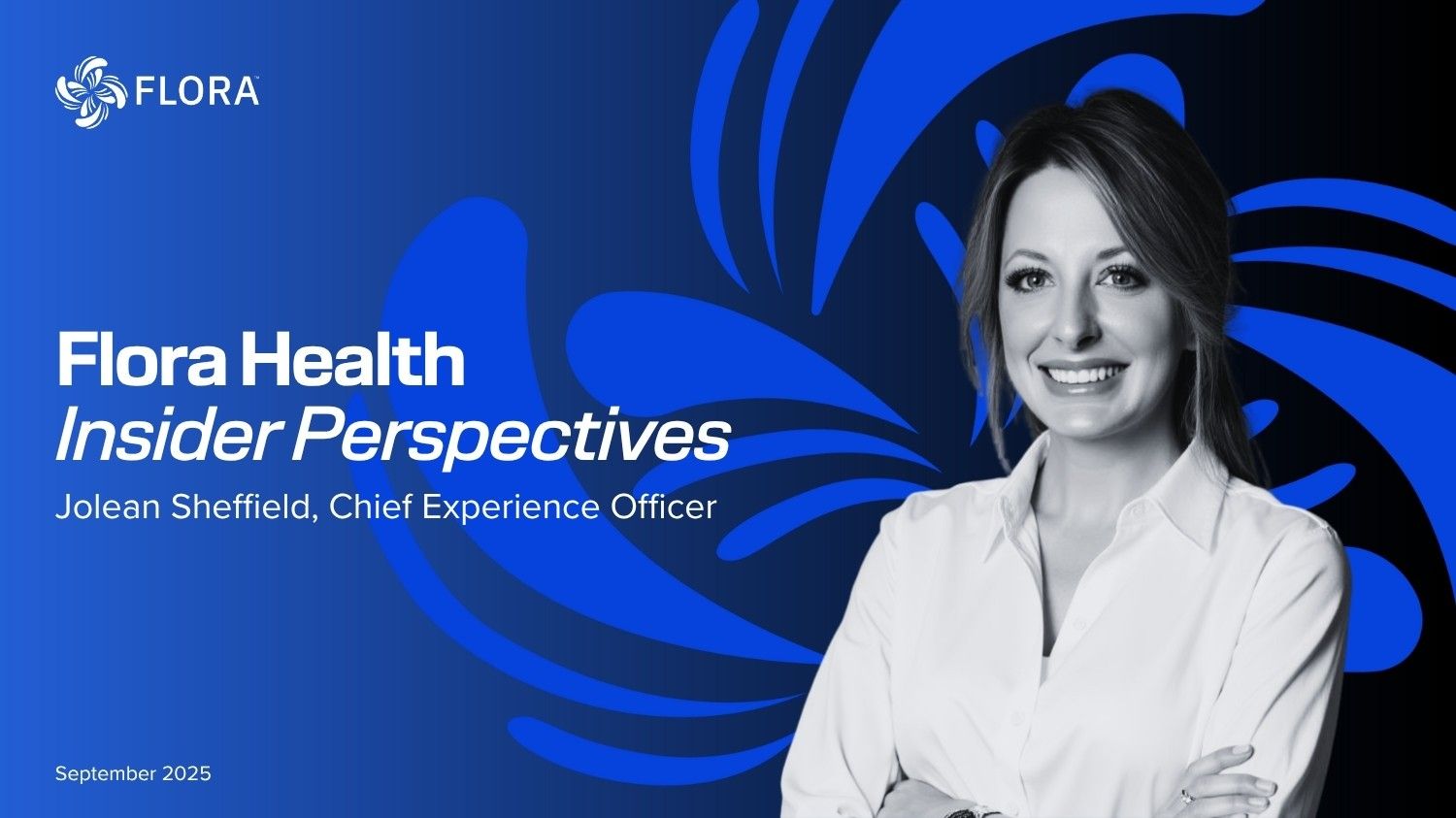
In our recent Flora Health Insider Perspectives article, Zack Hall explored how patient access automation can reduce administrative burden and help patient support teams move patients toward therapy more efficiently. That operational opportunity depends on something I think about every day in my role as Chief Operating Officer at Flora Health: how to make point of care engagement work inside the real workflows clinicians and care teams already use.
Throughout my career in health systems and health technology, one principle has remained constant: technology works best when it is built around the people who actually have to use it. Whether implementing EHRs, integrating new technologies into clinical workflows or guiding operational change, my role has often been to bring the clinician’s perspective to the table and ensure technology supports, rather than complicates, the work of delivering care.
That same principle is central to my work at Flora Health. The goal is not simply to put more technology or more information in front of HCPs. It is to use technology intelligently to create meaningful moments within the clinical workflow, surfacing relevant information and actionable insights precisely when they can help a provider make a decision.
We understand the significance of Electronic Health Record (EHR) engagement and workflow-integrated communication delivered during moments of patient care. That makes it fundamentally different from traditional physician marketing or standard digital media. It enters a clinical operating environment where clinicians are making care decisions inside highly compressed workflows and where every click, interruption, and added layer of cognitive burden matters.
Flora Health's proprietary technology, which is embedded directly within health systems' clinical workflows, creates the critical infrastructure that enables better outcomes at the point of care. We also know that success in EHR engagement starts with understanding the operational reality of care delivery. Clinicians measure efficiency in seconds and clicks. That means effective engagement in EHR environments is not driven by volume alone. It is driven by contextual relevance, timing precision, workflow alignment, and operational restraint.
The EHR is a clinical operating system, and engagement inside it needs to be designed with that reality in mind.
The Challenge: Moving From Placement to Workflow-Aware Engagement
Our team is comprised of experts who have spent decades redefining physician marketing across point of care. We are now translating that expertise directly into healthcare system environments where we can make a direct impact on patient access.
With the Flora Health teams' deep relationships and experience connecting pharma brands, providers, and patient at point of care, we know that EHR media works best when it is designed around how care actually happens, not simply where a message can be placed.
Beyond the Banner: Coordinating EHR Engagement Across the Workflow
At Flora Health, we focus on helping pharmaceutical and healthcare marketers move beyond isolated banner strategies toward coordinated, targeted, workflow-aligned engagement models. The four corners of an EHR banner can still play an important role, but the real opportunity is not the banner alone. It is how that banner connects to a broader strategy across the care team, the patient journey, and the access pathway.
The future of EHR engagement is about aligning the right information to the right clinician at the right clinical moment. That may mean supporting a nurse practitioner or physician assistant with more detailed clinical information ahead of a care team discussion, reaching the prescribing clinician with a highly relevant point of care message during the visit, and following up with a patient portal message that supports therapy initiation or adherence after the prescription is written.
Designing EHR Engagement for the Full Care Team
Effective EHR engagement also means looking beyond the physician as the only meaningful audience in the EHR. Modern care delivery is increasingly team-based, and advanced practice providers, nurses, care coordinators, pharmacists, and other clinical stakeholders often play important roles in patient education, treatment initiation, access coordination, adherence support, and longitudinal follow-up.
We find that this is especially true in specialty therapies, rare disease, oncology, autoimmune conditions, and other high-acuity patient populations where care plans require coordination across multiple stakeholders.
Why NPI Targeting Is Only the Starting Point
An NPI, or National Provider Identifier, can help identify a provider, but it does not fully explain how that provider practices, how they interact with patients, or how they fit into a clinical workflow. Effective EHR engagement requires a deeper understanding of provider role, specialty, care setting, patient population, workflow responsibilities, prescribing influence, referral behavior, and operational context.
Two providers in the same specialty may engage with patients, therapies, and health system workflows in very different ways. An NPI tells you who someone is. Workflow context helps explain how they practice.
The organizations that succeed in EHR engagement will be the ones that understand clinical operations, multidisciplinary care delivery, and workflow behavior, not only traditional advertising strategy. That is where healthcare engagement becomes more precise, more relevant, and more valuable to providers and patients
From Impressions to Coordinated Impact at the Point of Care
When EHR tactics work in isolation, they may create impressions. When they work in harmony, they can support better clinical understanding, more efficient provider engagement, and a more connected patient experience.
Measuring EHR Engagement Beyond Impressions
Point of Care Marketing Association (POCMA) member data reported by eMarketer showed point of care spending reached about $1.2 billion in 2025, with sales growing an average of 22% annually since 2019. That level of investment raises the bar for strategy, execution, and measurement. For EHR engagement, impressions and placement still matter, but they should not be the only measures of value.
The stronger questions are: Did the engagement reach the right clinician or care team member? Did it appear at the right point in the workflow? Did it provide relevant support with fewer clicks? Did it connect to a broader strategy across media, patient access, and patient engagement? Did it lead to an action or a decision?
This is where we focus on helping EHR strategies expand beyond media alone. The most effective approaches connect point of care engagement with workflow integration, patient access, support programs, and measurement. When those elements are coordinated, EHR engagement can do more than deliver a message. It can help support the next best action for clinicians, patients, and care teams.
The organizations we partner with that see the greatest value will be the ones that treat EHR engagement as a coordinated strategy across media, access, and workflow, not a standalone tactic.
About the Author
Jolean Sheffield is the Chief Operating Officer at Flora Health, where she leads client success and operations with a focus on creating seamless, scalable solutions for healthcare and life sciences organizations. She brings many years of experience implementing, training, and facilitating EHR systems at top hospital networks, including Baylor Scott & White Health in Texas, giving her a unique perspective on how technology impacts clinicians and patients at the ground level. At Flora Health, Jolean applies this expertise to align data and technology with real-world workflows, ensuring innovations deliver measurable impact.
Continue the conversation
Follow Flora Health for new perspectives
Get new executive insights and company updates as they publish.
Follow on LinkedIn