
Leadership & Culture
Culture as Infrastructure: Supporting the Team That Supports Healthcare
Executive analysis from Flora Health leadership on the partnerships, infrastructure, and workflow intelligence shaping the next era of point-of-care engagement.
Our Culture and People Drive Our Healthcare Technology
Healthcare technology companies tend to measure innovation in platforms, data, workflows, and partnerships. Those things matter. But behind every effective system is a team of people making decisions and staying aligned — often under pressure, often without a clear playbook.
At Flora Health, culture is part of how the work gets done — infrastructure that determines how quickly a team can move, how cleanly two strangers can collaborate, and how reliably someone new understands what's expected without every decision explained from scratch. That kind of culture doesn't happen by accident; we've built it with intention.
Why Culture Matters More as Healthcare Becomes More Integrated
Flora Health's teams work across product, technology, commercial strategy, growth, analytics, market access, and health system relationships — and on any engagement, several functions converge at once. That demands managing ambiguity without losing discipline, and understanding that individual contribution connects to something larger than a job description.
Culture has to support speed, judgment, and cross-functional execution. When your internal culture mirrors the coordination demands of your external work, you create an organization that can actually execute. When it doesn't, talented people work hard but not together, and the gap between effort and outcome widens. The credibility Flora Health carries with partners is not separate from the credibility we build internally, every day. Trust doesn't start at the contract — it starts at the culture.
People Growth Has to Match Company Growth
From Flora Health's earliest stages, leadership made a deliberate decision to treat people strategy as part of the business strategy — built into the operating model early, not addressed later once the work became more complex. Scaling requires the organization to mature in how it communicates, makes decisions, develops leaders, and holds itself accountable.
People growth, done well, means building the connective tissue between strategy and execution, and management ties that together. Investing in leadership development helps managers turn priorities into consistent execution.
The Operating Principles Behind Our Culture
Our culture is organized around five principles that are operational, not aspirational: results-driven, customer-focused, trust, accountability, and adaptability.
Results-driven is in our DNA — focused on outcomes and getting the right things done. Customer-focused means every decision starts with what genuinely serves the people we work with. Trust means teams believe in each other's expertise and judgment. Accountability means people move quickly within shared standards, with genuine ownership for outcomes. Adaptability means that when healthcare changes — and it always does — our teams adjust without losing their footing.
These are not values we announce. They are behaviors we recognize, reinforce, and model at every level.
Building a Culture That Supports External Trust
Clinical workflows, health system relationships, and life sciences partnerships carry governance and credibility requirements — partners are evaluating our organization, not just our technology. When a health system integrates a point-of-care solution, they're extending their credibility through ours. Our culture is a market competency.
What I Am Focused on at Flora Health
I think a great deal about what it means to grow a company without losing the things that made it worth growing in the first place: helping leaders develop the skills to scale their teams, and building systems that give people clarity and room to grow.
Most of all, it means keeping our people connected to the mission — that this work sits at the intersection of healthcare access, patient outcomes, and provider experience, and how we work together shapes what we deliver.
Culture as a Strategic Advantage
As healthcare becomes more connected, the companies positioned to lead will need teams that can work across complexity with trust and clarity where the margin for misalignment is narrow. The companies that get this right won't just build better products — they'll build better organizations: ones partners trust, talent wants to join, and that can sustain the growth that matters.
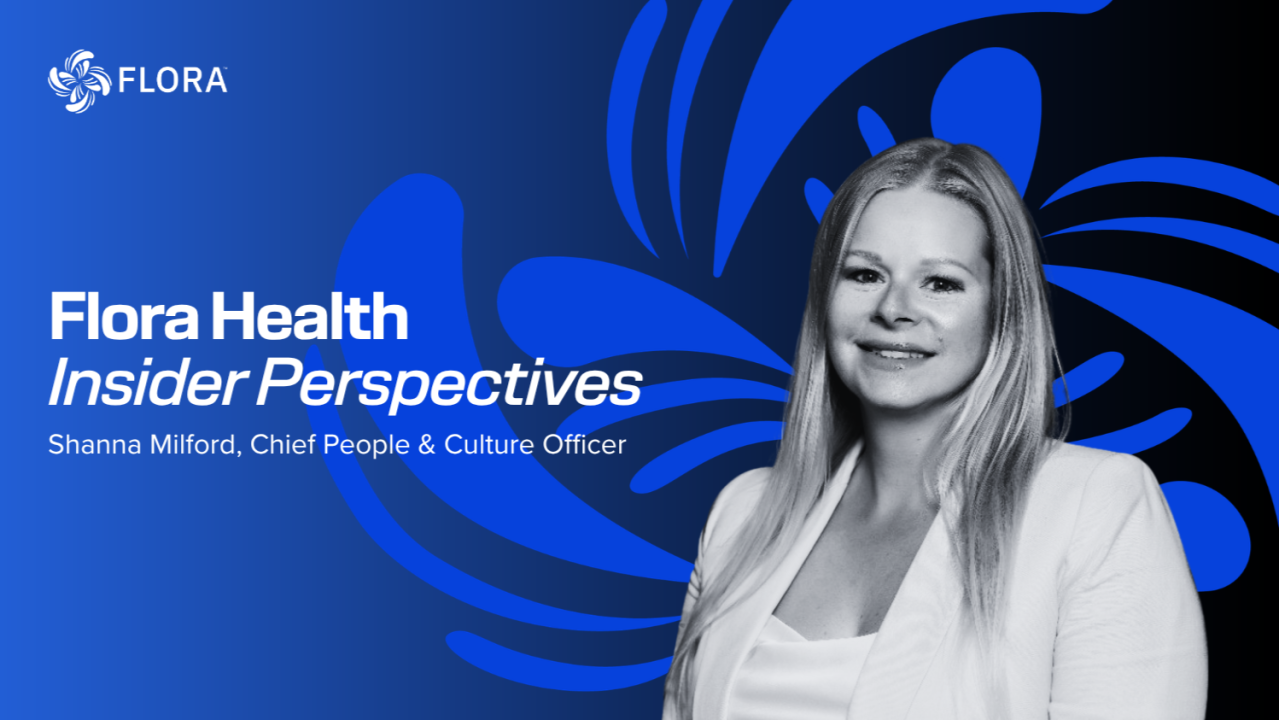
Shanna Milford is Chief People & Culture Officer at Flora Health, where she leads the company's people strategy, culture, organizational design, and talent infrastructure as the company expands its role within the healthcare technology and point-of-care ecosystem. She brings more than 20 years of experience helping high-growth organizations align talent, culture, and business performance across public, private, private equity-backed, and venture-backed companies. Shanna holds a master's degree in organizational and social psychology from Columbia University and a bachelor's degree in psychology from Saint Elizabeth University.
Continue the conversation
Follow Flora Health for new perspectives
Get new executive insights and company updates as they publish.
Follow on LinkedIn